Bottled and beautiful : )

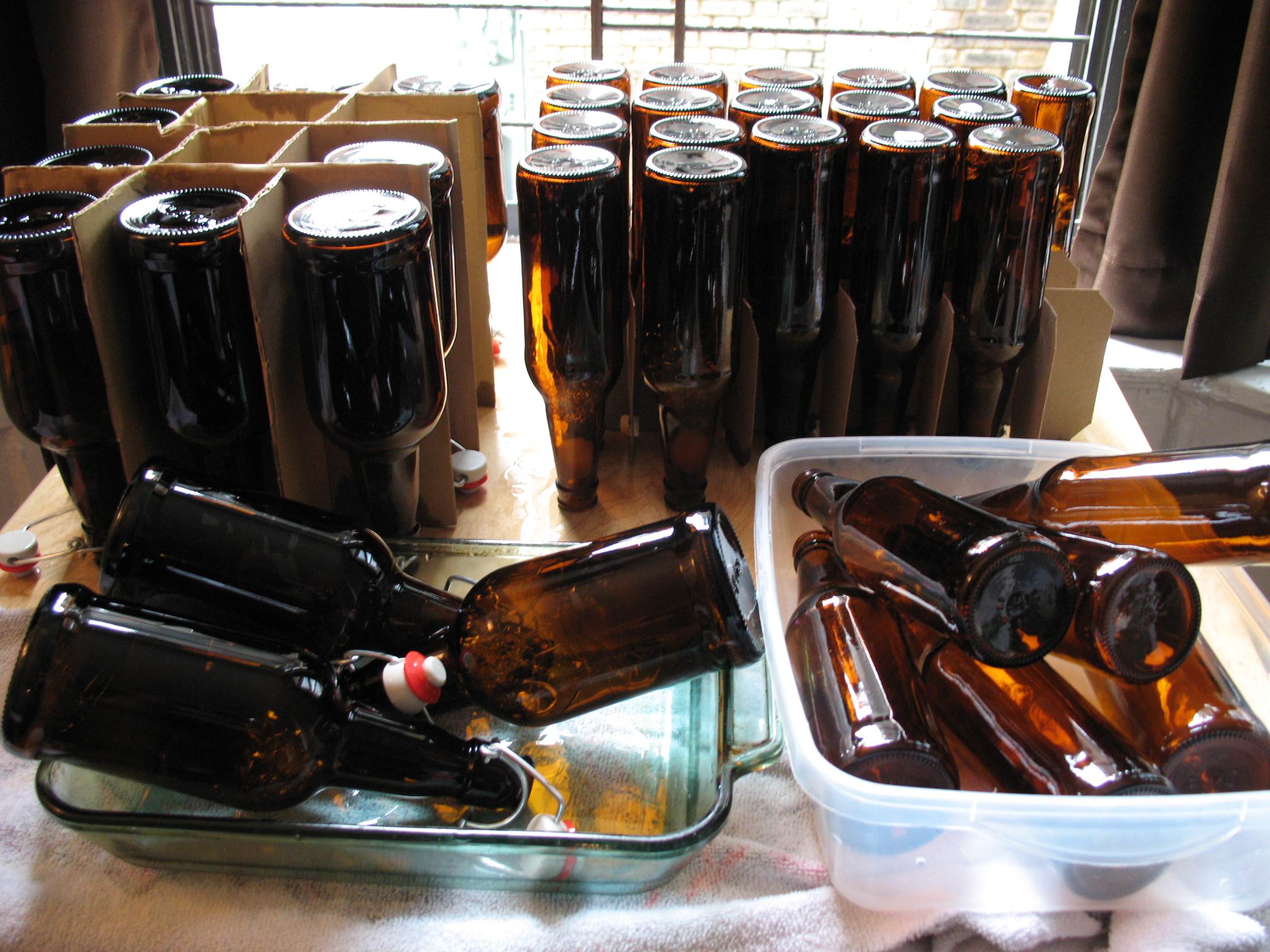
Oh, what a beautiful site this was after waiting for two weeks for our beer to ferment. Here is how the bottling happened….

First of all, we cleaned and sanitized anything and everything that would come into contact with the beer, including washing and sanitizing the bottles.  We use an acid sanitizer called ‘Star San.’  It’s effective and easy.  We mix 1 oz of Star San with 5 gallons of water and dip EVERYTHING into the solution.  There is no need to rinse with water afterwards. We have not yet splurged on a bottle drying stand, so we made do with what we had (you serious brewers out there might want to turn your heads at this moment).
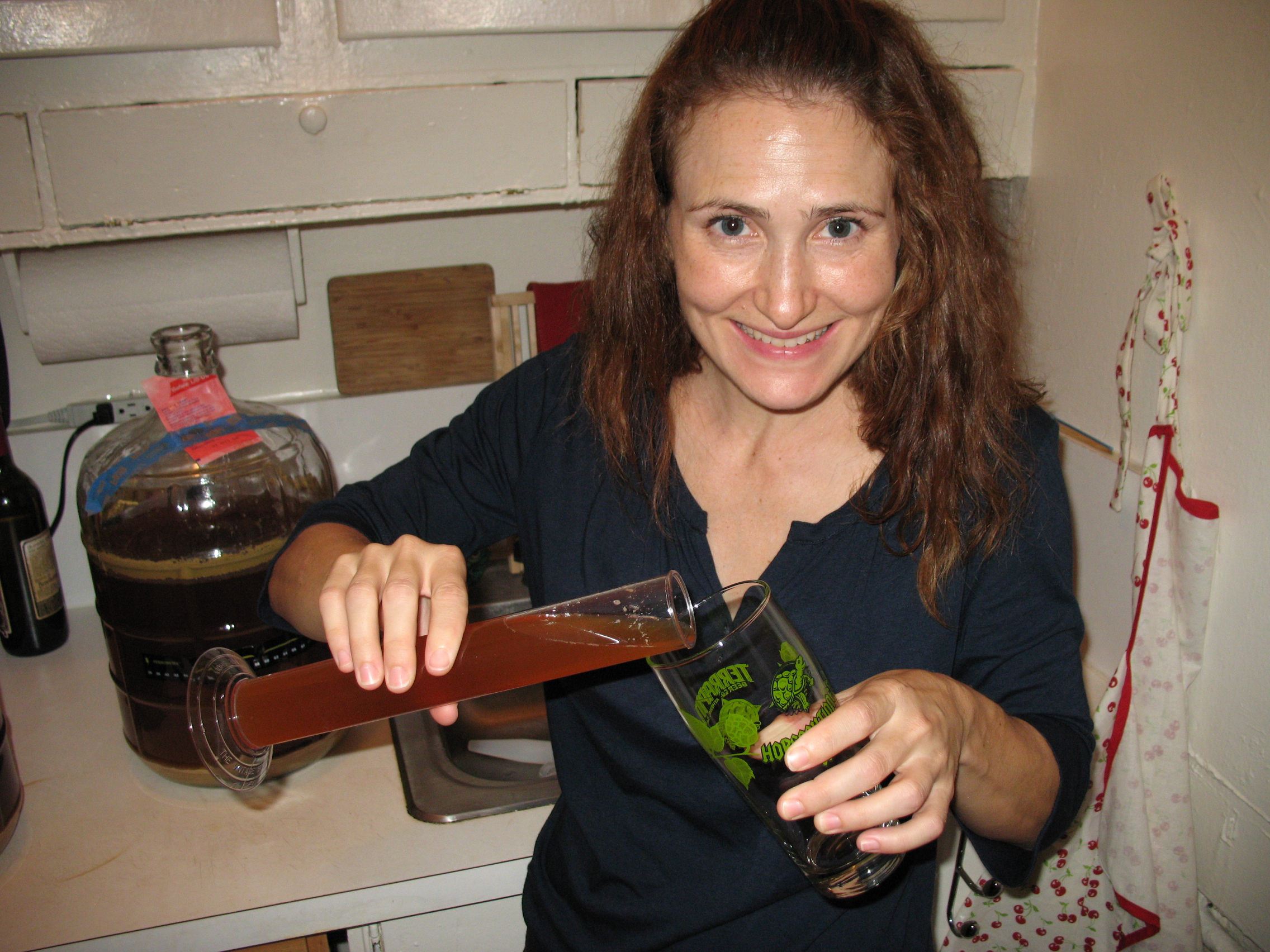
I wanted to test the final gravity (specific gravity measured at completion of fermentation) of the beer to check for any changes since last weekend. Using the beer thief, I transferred beer from the carboy to my beaker.  The hydrometer read, ‘1.016’. There was a slight change (I think….this thing is so difficult to read as it’s bobbing up and down in the beer).  Using an online calculator, I calculated the alcohol content…..6.05% by volume.  Not bad.

The sample went straight from the beaker into my glass.  I had to check the integrity of the beer, right?  The taste of the beer is great.  Carbonation has not been added (we’re getting to that folks…), so it is inactive and flat.  But….I’m not going to be the one to waste beer.
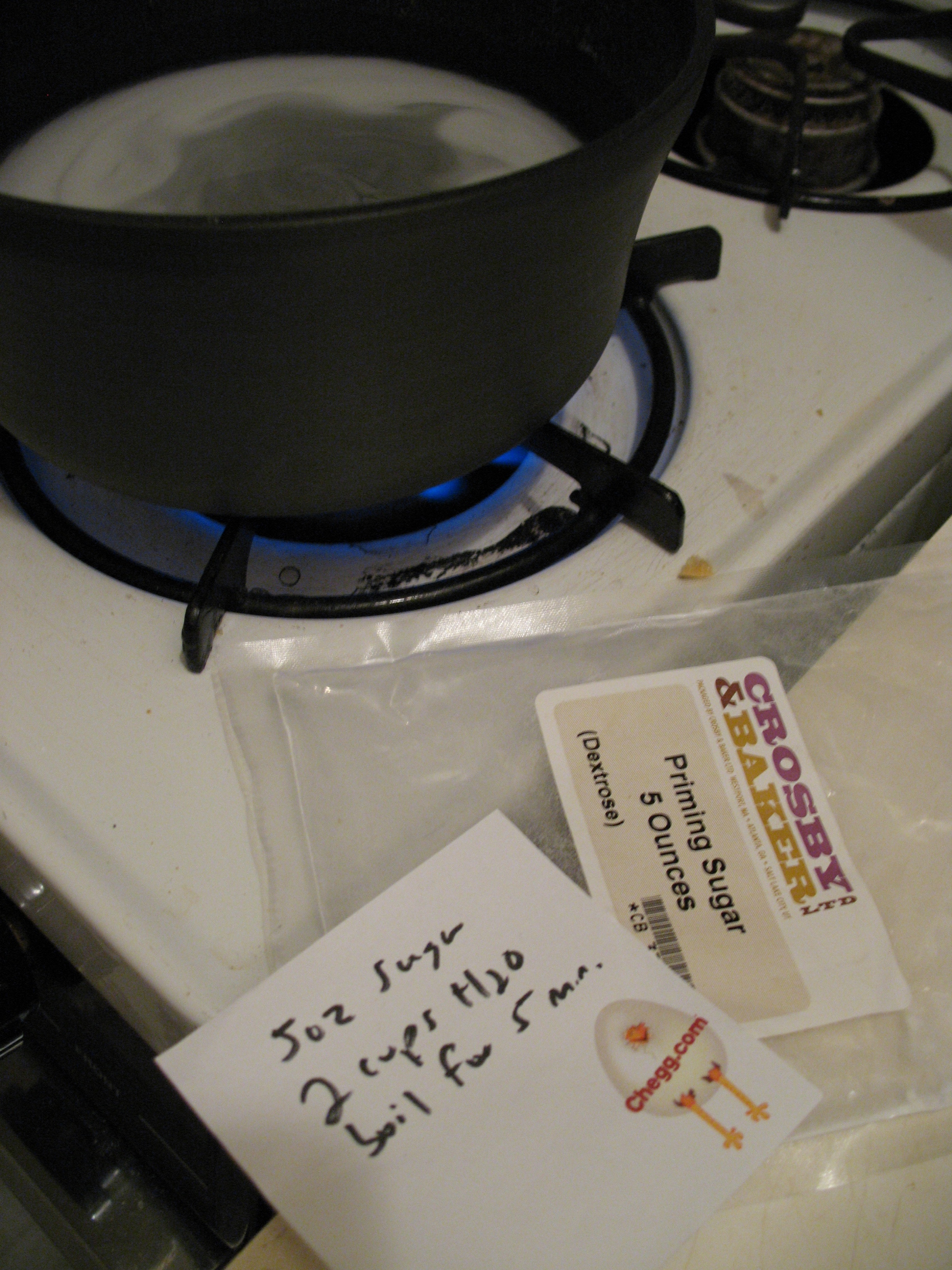
Before we could begin transferring the beer out of the fermenter, we had to prepare the priming sugar.  In the bottling process, we add a small amount of sugar to the now flat beer.  Once the beer is bottled, this sugar will be fermented by the living yeast and create the carbonation.  We boiled the sugar with a little bit of water and divided the syrup in half.  We added one half of the priming sugar to the bottom of the bottling bucket and reserved the second half for the next batch.
Now, we were ready to transfer the beer from the carboy where it has been fermenting for the past two weeks into the bottling bucket.  We placed the carboys on top of the counter (which, in my home, is only large enough for two carboys, one bottle of wine, and a coffee pot….all the necessities, right?).  We positioned the sanitized bottling bucket below the carboy and placed one end of our sanitized siphon hose inside the carboy and one end inside the bottling bucket.  We GENTLY transferred all of the beer EXCEPT for the last 1/2 inch of sediment.

Next stop, bottles.  We moved our bottling bucket to our table and attached the sanitized hose with the beer wand attachment.  The beer wand is a great tool.  It is a hard plastic tube with a spring valve on the end.  When the spring valve is pressed, it allows the beer to flow.  Simply insert the wand into the bottle and press down on the valve.  Control the flow by pressing or releasing on this valve as necessary.  We filled the bottles, leaving about 1 inch of air space at the top of each bottle.

Once the bottles were filled, we had to cap each bottle.  I placed a sanitized cap atop each bottle and capped using our bottle capper…..easy breezy.

Not so easy breezy for Jeff  : )    Here is his attempt at bottling.

Once we finished bottling the first batch, we transferred the beer from the second carboy into the bottling bucket and repeated the process.

Just in case you’re wondering what we did with the small amount of beer that would not fill a full bottle…..

So that we could keep the two types of beer separate, we placed different color stickers on the caps to indicate each type.  The bottles of beer were put back into the boxes, and the boxes were placed in the bottom of the closet for two final weeks of fermenting.

After these two weeks, the beer can be stored at cooler temperatures.  Thank goodness….I can only spare closet space for so long : )
do good ninjas

Posted in Ales, The Keg | Tagged | 1 Comment

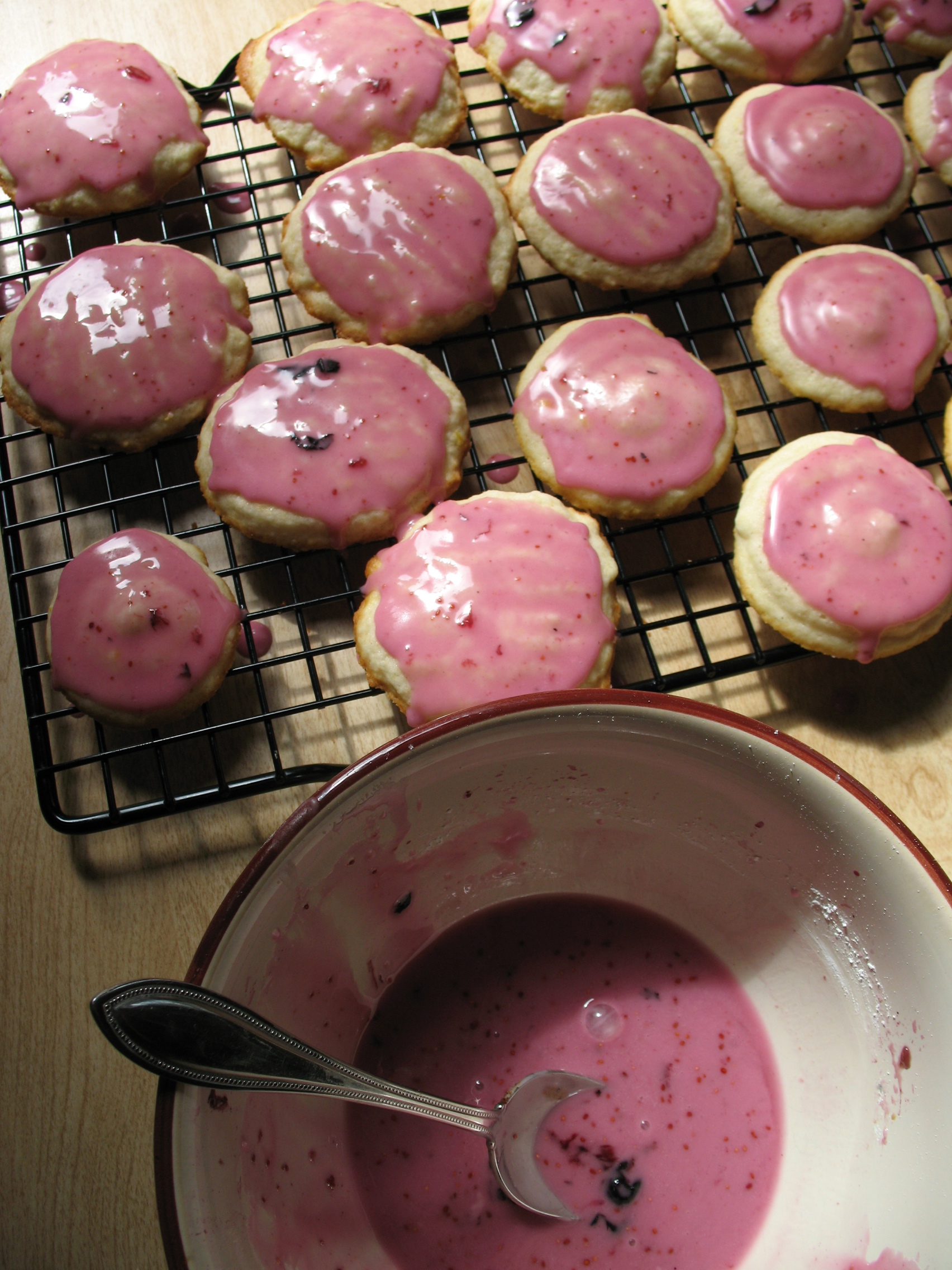
Lemon Buttermilk Cookies with Blueberry Glaze

Okay….it’s getting a little out of control around here.  Thank goodness that my husband is having to attend regular group meetings for school.  Otherwise, I would be eating all of these desserts myself.  These cookies are definitely worth the extra few miles that I have to run today.  I’ll get moving as soon as the cookies settle in my stomach….I swear.

I adapted the cookie recipe from the Buttermilk Cookie recipe on Epicurious.com

For cookies

  • 3 cups all-purpose flour
  • 1 teaspoon grated lemon zest
  • 1/2 teaspoon baking soda
  • 1/2 teaspoon salt
  • 1 1/2 sticks unsalted butter, softened
  • 1 1/2 cups granulated sugar
  • 2 large eggs
  • 1/2 teaspoon pure vanilla extract
  • 1/2 teaspoon lemon extract
  • 2/3 cup well-shaken buttermilk

For glaze

  • 1/4 cup frozen blueberries, thawed but not drained
  • 1 1/2 cup powdered sugar
  • 1/4 teaspoon vanilla extract
  • 1/2 teaspoon fresh lemon juice
  • 2 teaspoons buttermilk

Make cookies:
Preheat oven to 350°F with rack in middle. Butter 2 large baking sheets.

Whisk together flour, zest, baking soda, and salt.

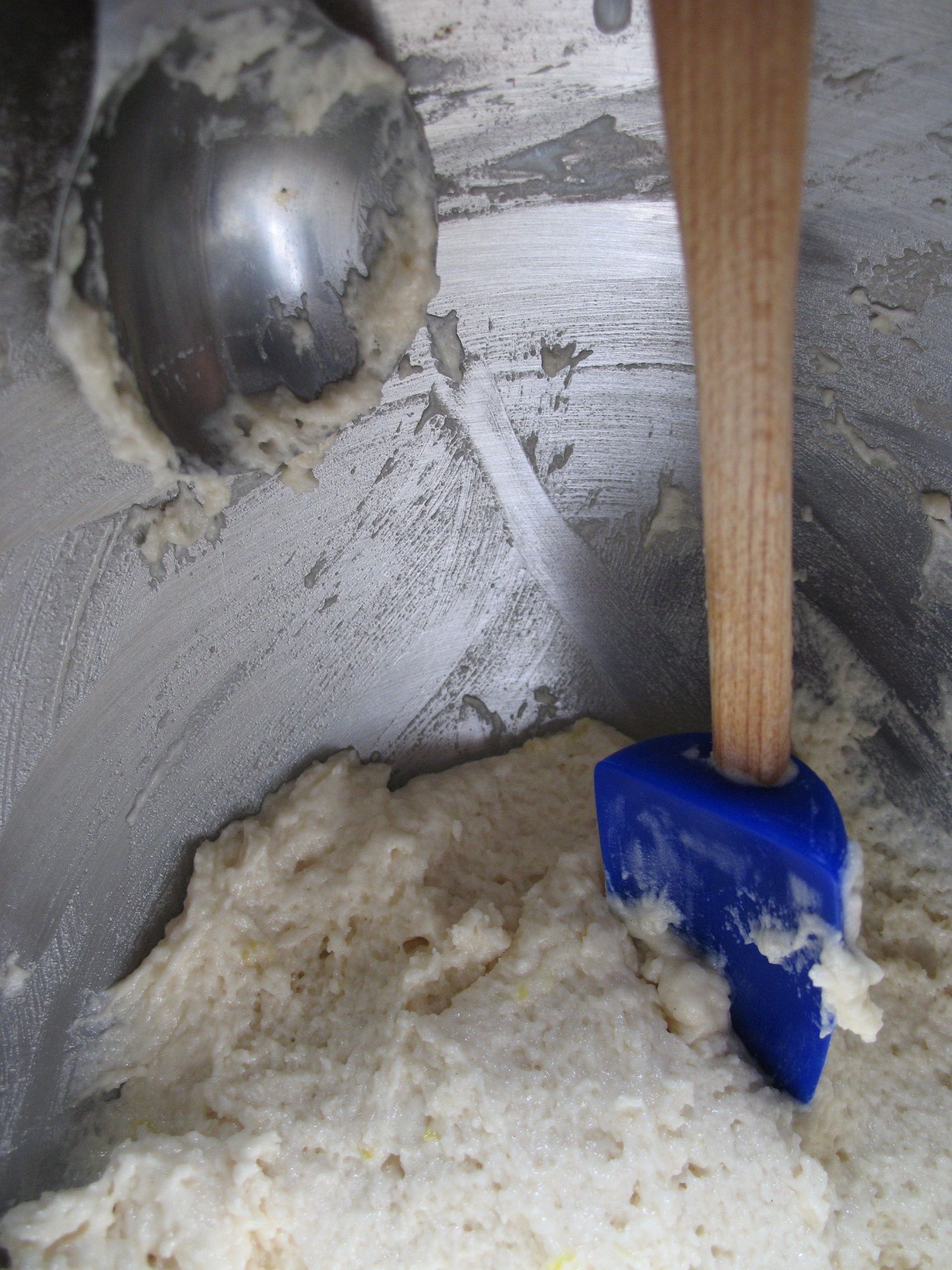
Beat together butter and sugar in a large bowl with an electric mixer until pale and fluffy. Add eggs 1 at a time, beating well after each addition, then beat in vanilla. Mix in flour mixture and buttermilk alternately in batches at low speed, beginning and ending with flour mixture, until smooth.

Drop level tablespoons of dough about 1 1/2 inches apart onto baking sheets. Bake, 1 sheet at a time, until cookies are puffed and edges are golden, 12 to 15 minutes per batch. Cool cookies on sheets 1 minute, then transfer cookies to racks.

Read More http://www.epicurious.com/recipes/food/views/Buttermilk-Cookies-241199#ixzz1Yi3tKlfC


Make glaze:

I found this glaze recipe on the blog, Joy the Baker at www.joythebaker.com.  I can’t wait to try out more of her recipes!

Mash the thawed blueberries in a medium sized bowl releasing lots of dark blue juice.  Remove most of the blueberry skins from the juice and discard.  Add the vanilla extract, buttermilk and lemon.  Add the powdered sugar and whisk to combine.

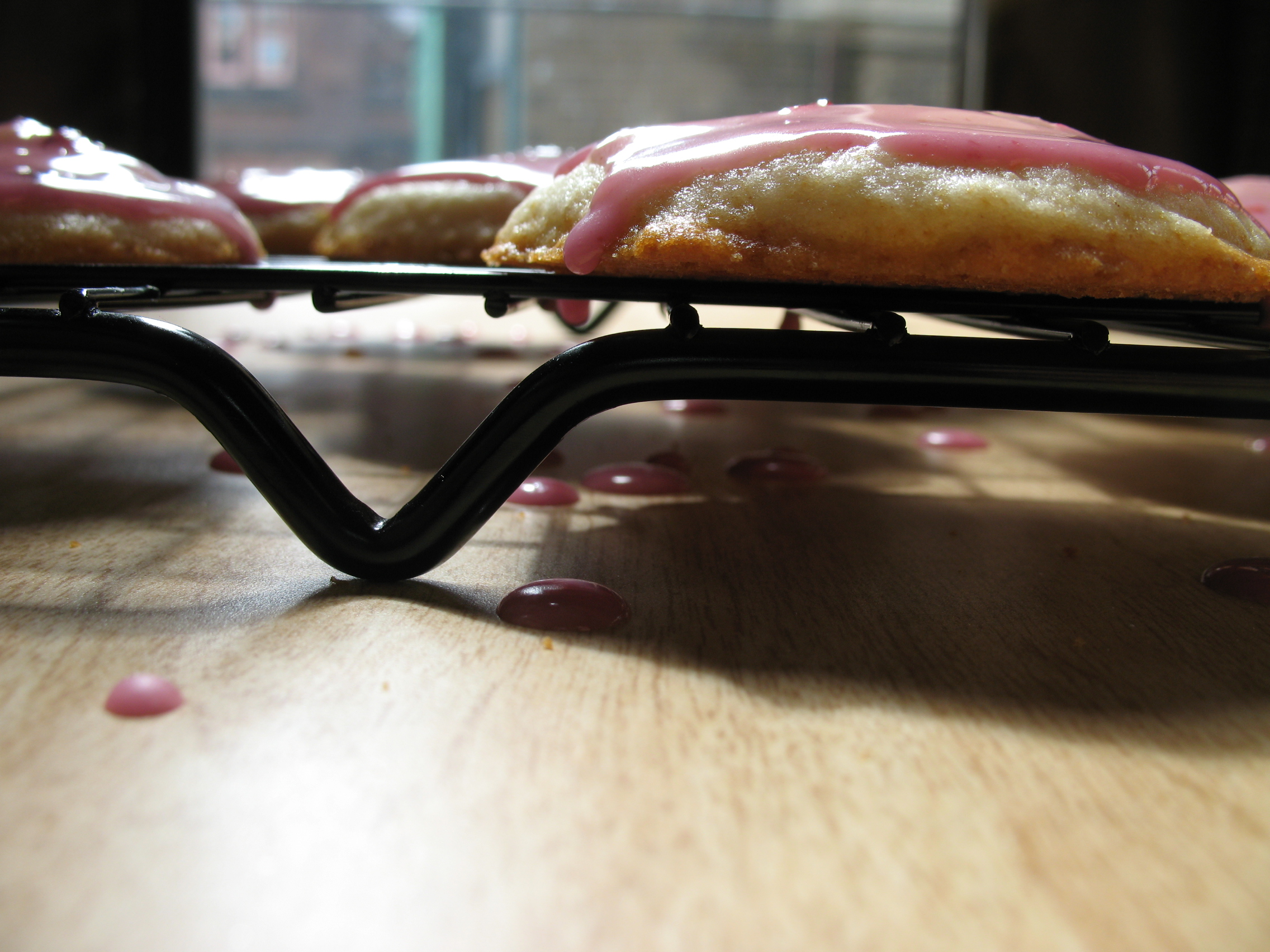
If the mixture is too thick, add more milk to reach the desired consistency.  If the mixture is too thin, add just a bit more powdered sugar.  Spread on top of the cooled cookies.

Enjoy!

Posted in Cookies, The Oven | Tagged , | Leave a comment

When I grow up…

I have been doing a lot of thinking about the type of establishment that I would love to own one day.

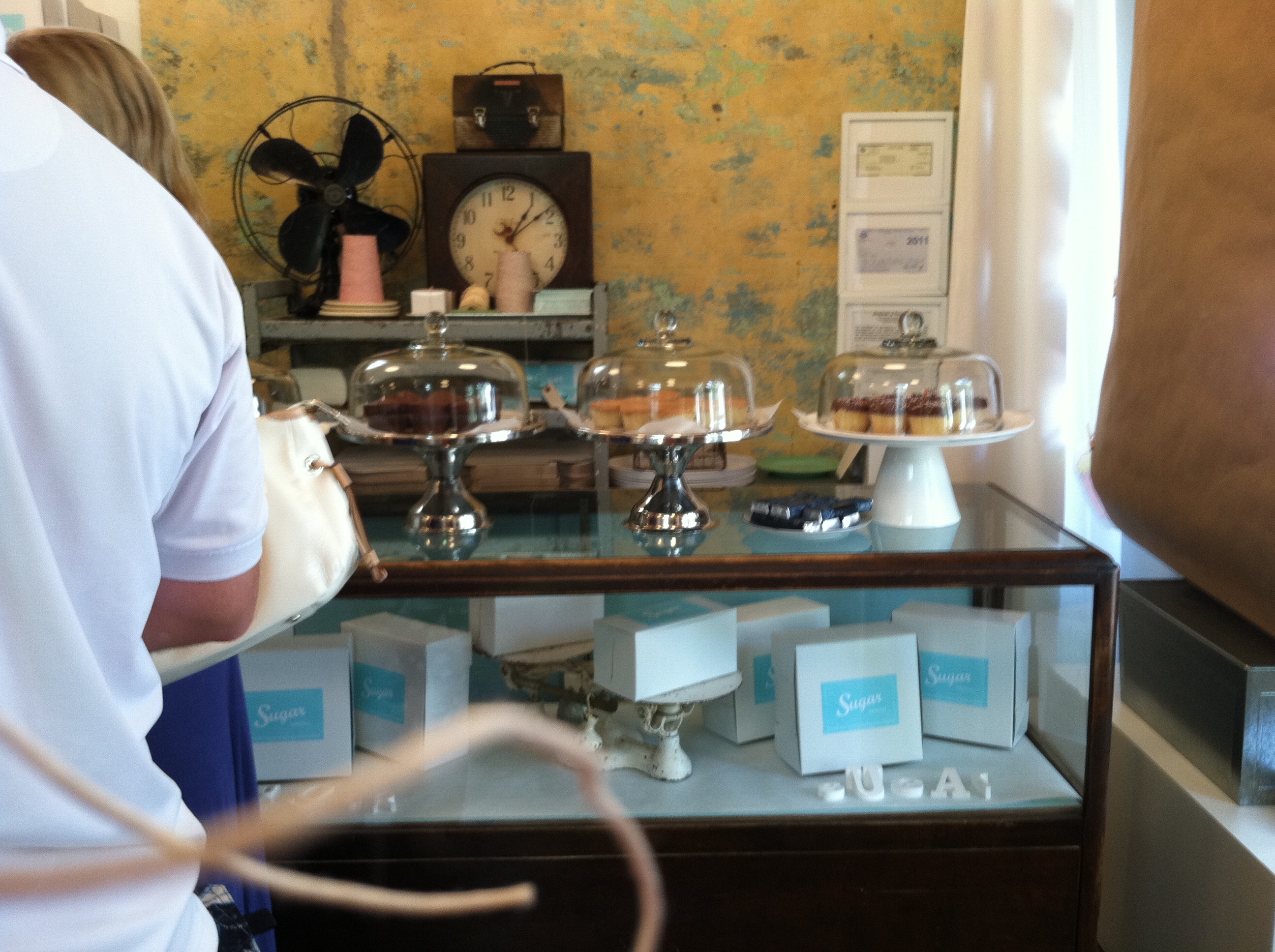
One of my favorite bakeries is called, ‘Sugar Bakeshop’ in Charleston, S.C.

I LOVE the simplicity of their website, www.sugarbake.com.  It is very easy to navigate. The pictures are great and the colors are wonderful.

The bakery has a very small storefront.  There is no room for eating in…unless you want to have your goodies inside their walled garden.

I love their chalkboard menu and old-fashioned cake stands and cookie jars.  I am also a big fan of their antique wooden showcase.

After visiting their establishment, I sent an e-mail to their company address to tell them how much I enjoyed the bakery….and ask for any advice in opening my own establishment.  No reply, but I am going to try again.  One day I hope to own an establishment with a similar look and feel.  I promise, however, to reply to everyone, even if only to say ‘thank you’ to those people who take the time to e-mail their positive experiences.  (oh…one day I hope I have this opportunity)

Posted in Uncategorized | Leave a comment

Sweet dreams….

I dreamed about pies all night…seriously.  I woke up in the middle of the night remembering all of the pie flavors that I had created in my dreams.  I went back to sleep and baked pies the rest of the night.  It is so nice to wake up to memories of good dreams. I’m thinking that it was the last batch of yummy cupcakes that I made that had me dreaming of sugar…

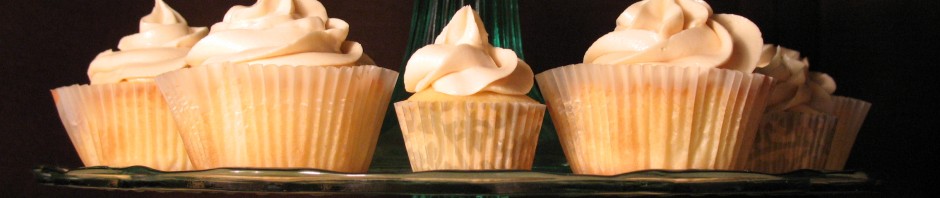
I found this recipe in Saveur Magazine.  It is meant to be a 3-layer cake.  The mini cupcakes were also very yummy.  The cupcakes turned out very light and fluffy.  For you guys who like a more substantial mini, this might not be the recipe for you.  The icing was TERRIFIC!

The Manor Born Banana Cake with Coffee Buttercream

Makes one 8″ layer cake (or roughly 30 mini cupcakes)

For the cake:

  • 8 tbsp. unsalted butter, softened
  • 2 1/4 cups cake flour
  • 2 tsp. baking powder
  • 1 tsp. baking soda
  • 1/4 tsp. salt
  • 1 1/3 cups sugar
  • 1 cup mashed ripe bananas
  • 2 eggs
  • 1/2 cup buttermilk
  • 1 cup coarsely chopped unsalted pecans

For the Frosting:

  • 1 cup sugar
  • 2 tbsp. instant espresso powder
  • 6 egg yolks
  • 1 lb. unsalted butter, cut into small pieces and softened

1. For the cake: Preheat oven to 375.  Grease three 8″ round cake pans, line each with parchment paper, and set aside.  Sift flour, baking powder, baking soda, and salt together into a medium bowl and set aside.  Beat butter and sugar together in a large mixing bow with an electric mixer on high speed until fluff, 3 – 4 minutes.  Add bananas and beat on medium speed until well combined.  Add flour mixture, stirring with a wooden spoon until just incorporated, then fold in pecans.  Divide batter equally between prepared pans, smoothing tops with the spatula.  Bake until cakes are golden brown and spring back when touched, 10 – 15 minutes.  Cool cakes in their pans for 5 minutes on a wire rack, then remove them from pans, peel off parchment paper, and allow to cool completely on the rack.

2. For the frosting: Combine sugar and 1/2 cup water in a small saucepan and boil over medium heat until sugar dissolves and syrup reaches 238 degrees on a candy thermometer, 15 – 20 minutes. (**make sure that your temperature does not go beyond the 238 degrees). Meanwhile, dissolve espresso powder with 1 tsp. boiling water in  small bowl and set aside.  Beat egg yolks in a medium mixing bowl with an electric mixer on high speed until pale yellow, 4 – 5 minutes.  Gradually add hot sugar syrup to yolks in a slow steady stream down the side of the bowl, beating constantly on medium speed and continue beating until mixture cools to room temperature, about 5 minutes.  Add butter, one piece at a time, beating thoroughly on medium speed after each addition, and continue beating frosting until light and fluffy, about 5 minutes.  Beat in espresso and set aside.

If you are making the cake, you should have enough icing to spread about 1 cup between each layer.  Use remaining icing to ice the side and top of the cake.  Coffee beans make a great garnish!

Eat and enjoy!


Posted in Cakes/ Cupcakes, The Oven | Tagged , | Leave a comment

Bottle or Bust

We had planned on bottling our beer this past weekend and then starting our next batch…..a Black Saison.  After reading a bit more about bottling, we have decided to wait one more week.  Although our beer has quit bubbling, it appears as though fermentation should be given at least two weeks.  We don’t want to risk having our first batch explode in their bottles!    The beer will remain in the bathroom.

Using a hydrometer, we did check the specific gravity of our beers at this point.  Let me share with you what I have learned about the specific gravity of beer.

The original gravity (O.G.) is the specific gravity of the wort before fermentation begins. Wort is the liquid extracted from the mashing process.  It contains the sugars that will be fermented.  The O.G. depends on the sugar content of the wort.

The final gravity (F.G.) is the specific gravity measured at completion of fermentation. This is basically a measure of how much sugar is left after fermentation.

For a beer to fit within a certain style, both its O.G. and F.G. must fall within determined ranges.  For instance,  the O.G. for our IPA recipe should fall at 1.062.  We took our measurement before the beer was put into our two carboys to ferment.   Luckily, our beer measured just at 1.062 (whew…..so far, so good)!  The F.G. of our American IPA could measure as low as 1.003 or as high as 1.020.

The size of the gap between the O.G. and F.G. can be used to calculate the alcohol content of the beer.

We have brewed two batches of an American IPA, one with an American yeast and one with an English Ale yeast.

We used the following utensils to remove a sample from each carboy.  The long rod (the beer thief) is dipped into the opening of the carboy to remove a sample.  The sample is put into the plastic beaker.  The hydrometer is then placed into the liquid.

At this point, the specific gravity of the batch with American yeast is 1.017.  The specific gravity of the batch with the English yeast is 1.02.

Using an online calculator, I input my O.G. and F.G. numbers to calculate the alcohol content:

American yeast: 6% by volume;  English yeast: 5.6% by volume.

I did give both samples a try.  Without any carbonation, the beer was a little flat but the flavors tasted great!  We will definitely be bottling next weekend.

Posted in Ales, The Keg | 1 Comment